Author Archives: Carina Hart

Fighting Fit

One of many reasons I don’t do Twitter: in a follow-up to my post on the abuse of Marion Bartoli at Wimbledon, here is a neat selection of the kind words she received on Twitter. Thanks to Nesrin for the link.

1068366-portrait-of-a-styled-professional-model-theme-teens-education-sport

www.123rf.com

My previous discussion of sportswomen wearing makeup barely scratched the surface of the problem – as the folk on Twitter demonstrate, it takes more than lip gloss to conform to their idea of a woman, and Bartoli received a ridiculous number of tweets saying that she must be a man (because she doesn’t look like Lisicki).

As we have seen in the past couple of weeks, Twitter has become the platform of choice for displays of misogyny, most recently rape and bomb threats to Hadley Freeman, Mary Beard, Laurie Penny and other female writers and journalists, for no apparent reason. Is it the thrill of a public audience? The 140-character limit that is so suited to insults? These are some of the theories put forward by Claire Hardaker in the Guardian. Is it that these thoughts (if they can be called that) would have been expressed anyway, somehow?

Or is it, even worse, just a trend? One of those things that seems isolated and weird at first, but gets picked up by bored people and snowballs, like printed leggings?

OK, maybe not just a trend. The misogyny is clearly there. But the sudden enthusiasm first for rape threats and then bomb threats has the hallmarks of a fad, getting picked up and proliferated like the word ‘awesome’ in its current, irritating UK usage.

The question then is whether to publicise these tweets and talk about them, or deny them the attention.

Should I perhaps have refrained from posting the Marion Bartoli tweets?


Face of Radio

467732-how-facebook-changed-the-world-the-arab-spring.jpg

(telegraph.co.uk)

Since her appointment as the new panel member of BBC Radio 4’s Today Programme, Mishal Husain has already been salivated over by virtually every newspaper reporting on the story. By the male journalists, that is, who felt called upon to discuss this important event.

Astonishingly, this is the first time the Today Programme has had two female presenters on its panel, and one of an ‘ethnic minority’ (unpleasant phrase, implying as it does that white is the universal norm). Yet despite the er, groundbreaking nature of her selection, Husain is still discussed almost entirely in terms of her looks.

Peter Hoggart at the Guardian felt it necessary to note that Husain is “captivatingly intelligent and beautiful” (hey, at least he said she’s intelligent, right?), while his colleague Peter Preston chose the same combination, describing her as “the most luminous of BBC presenters, combining beauty and a keen intelligence”.

The Telegraph helpfully recounted a 2009 clash between Husain and her new Today co-host John Humphrys, when on Celebrity Mastermind he asked her whether she was only employed for her looks, and implied that in 10 years’ time she would be getting the sack.

However, Quentin Letts at (where else?) the Daily Mail trumps them all with his assessment of “Dishy Mishy”: “her gaze is as steamy as a pan of slimmer’s spinach”.

The thing is, you would think that she could escape this kind of appearance judgement on radio. Where no one will see her.

Nope, apparently not.


A Pretty Parody

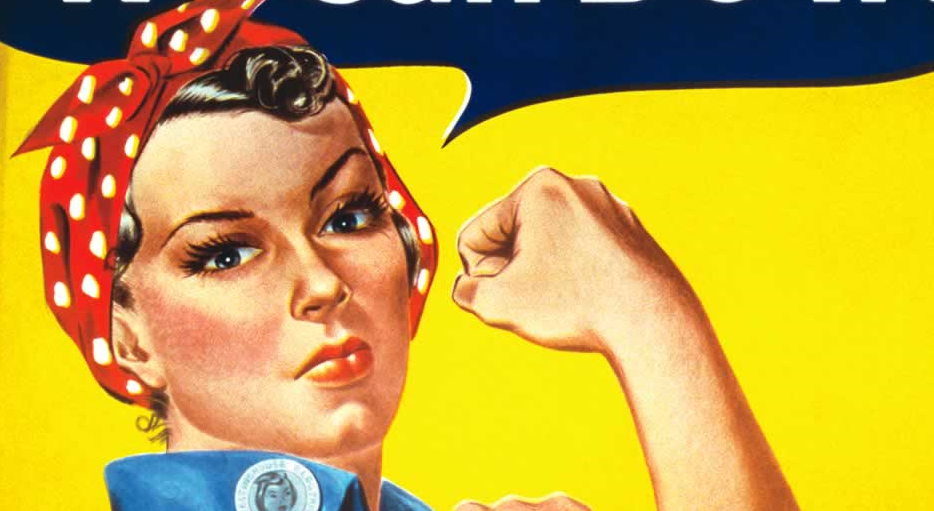
This may be hilarious, but I do wish that actual, academic feminist books didn’t go and say the same things.

**Feminist Makeup Tutorial**

– courtesy of Tadelesmith at YouTube.

I’m off to find an empowering shade of lipstick…

feminist-makeup

(evfxonline.com)

Seriously though, are there any really good (feminist) justifications for makeup?


The Revenge of Photoshop

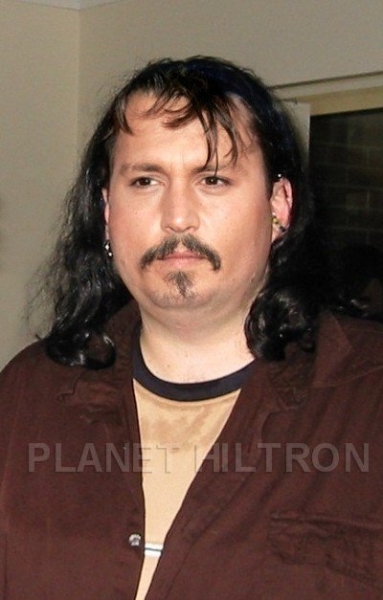
Well, here is something marvellous. Thanks to Autumn Whitefield-Madrano at The Beheld, I came across the work of artist Danny Evans at Planet Hiltron, who is performing a public service by turning Photoshop against its masters.

Image

Guess who? Not quite Jack Sparrow…

Evans alters images of celebrities to make them look… not like celebrities, but instead like ordinary people who cannot hire a personal trainer or spend $2000 a week on their hair. Apart from his penchant for styling his victims circa 1985, this reminder of just how much work goes into red carpet beauty is both chilling and delightful.

A while ago I wrote about how few of us could turn down a little retouching on our own images (or selves), but perhaps I should rethink that: Photoshop can be cruel as well as kind, and there is a real danger in people’s images being infinitely changeable – extreme cosmetic surgery seems to grow from this ‘transformative’ and beauty-centric attitude. There is something to be said for the belief that you can be whoever you want to be, but when this is applied to beauty, as it so often is, the only people who seem to gain are the CEOs of L’Oreal and pals.

I would like to end on a lighter note though, in line with Evans’ experiment. After all, the field of beauty is sadly short on laughs.

Which other famous beauties would you like to see receiving the Photoshop Revenge? I vote for Jon Bon Jovi, who looks more like a Ken doll every year.


Game, Set, Mascara

I am cautiously optimistic by the number of people who are expressing their fury at the judgement of female sportswomen purely on their appearance. An almighty furore blew up after BBC Radio 5 Live presenter John Inverdale celebrated Marion Bartoli’s Wimbledon win with the meditation, “Do you think Bartoli’s dad told her when she was little, ‘You’re never going to be a looker, you’ll never be a Sharapova, so you have to be scrappy and fight’?”.
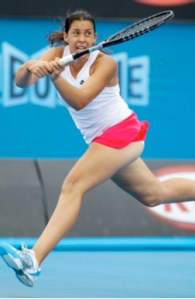
Bartoli

www.ball71.com Power over pretty: shame that the uniform requires knicker-flashing though.

However, when Tanya Gold at the Guardian took Inverdale to task for this display of mean-spirited idiocy, she still felt the need to add that Bartoli is in fact pretty. And therefore OK after all.

I thought the whole point was that it didn’t matter? That sportswomen are inspiring because their achievements are based on talent, discipline and rigorous training? Perhaps not, when even those defending this ideal feel that the sportswoman in question needs to be validated by prettiness.

This seems like a good place to start in rejecting the focus on sportswomen’s looks: being careful not to reinforce it by mentioning their looks ourselves.

But I would like to mention their makeup. Did anyone else notice a number of sportswomen at Wimbledon and last year’s Olympics appearing to wear makeup to compete? And didn’t this strike you as odd? I certainly wouldn’t want to wear foundation or mascara when my sporting performance is of the utmost importance: not comfortable, and I would worry about it all dripping off my face as I leapt over hurdles or flung a javelin.

And yet some did. Sabine Lisicki was definitely wearing eye makeup in her match against Bartoli.

Rhona Foulis at Progressive Women observes the habit of interviewers to ask sportswomen about their beauty regime (imagine Andy Murray’s response to that). Jessica Ennis responded to such a question:

“I always wear a bit of make-up to compete – foundation, Olay Essentials SPF30 […], eyeliner, mascara and a lip moisturiser. If I feel I look nice it’ll help my performance.”

Ennis

Daily Mail article which considers Ennis’ beauty regime the only thing worth discussing.

Really? Why? Oh right: Ennis is the “face” of Olay’s Essentials range. I sense a problem here.

As Meli Pennington of Wild Beauty writes, some athletes such as US boxer Marlen Esparza have worn makeup to compete without the influence of sponsorship – though Pennington asks whether this is a kind of ‘audition’ aimed at getting sponsored. Esparza, who is now sponsored by Cover Girl, is quoted as saying, “I think if you look good you feel good, and if you feel good then you fight good.”

I wouldn’t want to reject this argument entirely (actually I do want to, but shouldn’t presume to know what goes on in people’s minds), but I would question the assumption that women need makeup in order to look good. But it does seem useful to mention here that women’s sport receives on average only 0.5% of all UK sports sponsorship. They need the money.

It is not easy to assert how much makeup sportswomen wear while competing, nor why they wear it, but this is a discussion that needs to remain in play. If we accept unquestioningly that sportswomen should make an effort to look pretty, then that assumption will continue to hold for all women, and we really don’t need that.

To finish on a lighter note, the New York Metro has conducted an amusing experiment, to show what men’s sports coverage might look like if it was photographed in the same way as women’s sports. Turns out that recognising people by their buttocks is not so easy.

For more on this see Hadley Freeman at the Guardian on sportsmen’s girlfriends, and Dodai Stewart at Jezebel on the different shapes of athleticism.


Despairing of Beauty

Having spent much of my PhD pondering the relationship of philosophy to beauty, this article by Andy Martin is refreshing in its topical focus on human beauty – and ugly philosophers.

socrates

Socrates (www.historyguide.org)

Martin suggests that the self-examination at the centre of the philosophical mindset is in opposition to the sense of one’s own beauty; when you start looking for flaws, of course you find them, as many a teenager has discovered in front of the mirror.

“I can’t help wondering if ugliness is not indispensable to philosophy. Sartre seems to be suggesting that thinking – serious, sustained questioning – arises out of, or perhaps with, a consciousness of one’s own ugliness. Philosophy, in other words, has an ironic relationship to beauty.”

Here there is also the implication that philosophy involves a drive to better oneself (and one’s thinking), so that there is no place for self-satisfaction. The idea that one can never be good enough is indeed familiar in the context of beauty and, as Martin points out, cosmetics companies make a lot of money from this urge to attain perfection.

However, the antagonistic relationship between philosophy and beauty which Martin sets up makes me wonder whether philosophy is, then, the best medium with which to analyse beauty. It seems to allow for only one interpretation of beauty: as an ineffable, impossible ideal that can never be made flesh.

This is a valid and convincing concept of beauty, but I am still searching for alternatives. Perhaps philosophy may be able to offer a better way for us to engage with the impossible beauty ideal – or would we be better off giving up all this self-examination? The less-examined life might just be worth living.


Biographies of Sin and Beauty

Sin

This new blog project will present a series of ‘biographies’ of beauty, exploring the narratives that are built up around beautiful people – real, mythological and fictional – and particularly the way that these narratives connect their beauty to sin and sinfulness. Not so much biographies of beautiful people as of their beauty itself.

The project will analyse the way that historical interpretations and cultural representations of beautiful people create a narrative of their beauty as something bewitching and dangerous, and depict this power as stemming from the original sinfulness of beauty. I use the Christian phrase deliberately; religion has had a significant part to play in this process and these blogs will examine the ways in which religions both adopt beauty to aestheticise their systems, and also vilify beauty – in case people forget to worship anything else.

This attitude is not exclusive to religion, and I will also look at the way beauty is used in narratives of financial, social and political power. As a whole, then, I hope that this will form a biography of beauty, detailing the conflicting reactions it inspires and the way in which such reactions have evolved – or been manufactured.

We will begin with the Queen of Sheba.


Apprentice to Beauty

I confess that I haven’t watched the new series of The Apprentice – partly because I simply can’t stomach yet another round of shouting and incompetence, and partly because this year it seems that the criteria by which the candidates are chosen have changed.

p00pyn0tp00pynl3p00pyn21p00pyncc

http://www.bbc.co.uk – I wonder how much these were retouched?

They’re all gorgeous.

I know it’s TV and eye candy is a requirement, but there has been a clear shift in the participants of this series, so that any big noses, fatties and spotties have been scrupulously filtered out. Have a look here.

Admittedly this is more true of the women, but that is no great surprise, and the overall youth, slimness and attractiveness of all the candidates cannot be ignored. This is the culmination of a beautifying process that has increasingly pervaded The Apprentice, and this series is the first in which they all, ALL, fit the profile. The problem is that on a programme like this, which is emphatically (or so Lord Sugar claims) about business skill, the profile of a candidate no longer seems to prioritise the vaunted business acumen: now, you can only make it if you are beautiful.

Of course no-one should be considered incapable or unintelligent if they happen to be good-looking and groomed – an assumption often seen in previous series – but this is the other side of the coin, and we’ll never make any progress with one of these predicaments if we do not also address the other.

Beauty needs to be irrelevant.

Presentation, no; if you work with people it inevitably helps to appear polished and smart. But you should not need to look like a pop star just to be in with a chance. In fact, I quite resent having to say something so obvious.

So I won’t be watching The Apprentice – once a programme like that has become indistinguishable from The Only Way is Essex it’s probably time to turn to a good book.


The Art of Light(en)ing

Beyonce

http://www.guardian.co.uk

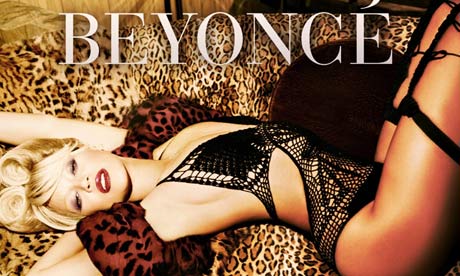
In yesterday’s Guardian blog Bim Adewunmi asks, “So what if Beyoncé’s skin colour is looking lighter?”, a question which I think has many more answers than she cares to give.

In response to the furore surrounding Beyoncé’s new album cover, Adewunmi makes the perfectly valid point that, of course, black people’s skin colour “changes with the seasons” and so is sometimes simply lighter. Adewunmi puts the fact that Beyoncé is far whiter in this picture than could possibly be accounted for by a lack of sun, down to lighting and retouching, and then considers her case closed. But look at the picture: what Adewunmi has failed to observe is that in post-production the singer has been deliberately turned into a white woman. She is blonde. With pale skin and a heavily made-up face that bears no resemblance at all to any other images of Beyoncé.

The implication is that Beyoncé’s image was not acceptable in its original form, requiring a complete overhaul from black woman to white.

In countries all over the world there are centuries-old prejudices in favour of pale skin, usually signifying higher class and moral purity – the UK, US, India and China are a few examples. However, that cannot be the case for Beyoncé, considering the composition of the image: she is near-naked and draped over leopard skins. Moral purity is evidently not a concern.

My research addresses what happens when human flesh is turned into art. Here we have one example: what happens is that the model’s flesh is no longer their own, modified beyond recognition into a clearly established Western ideal of beauty (in this case very much conflated with sexiness). The philosophies of Plato and St Augustine argue that the more flesh is reified into an abstract ideal of beauty, the more moral that beauty is. The further we get from the actual, tempting flesh, the purer the image becomes. But oddly, in the case of Beyoncé, her post-production team have reified her image into an ideal in an effort to make her more tempting, discarding every hope of moral integrity in the process.

Is it simply racism? A rather archaic devotion to the Marilyn Monroe ideal of beauty? A direct consequence of the continuation of such attitudes is the popularity of products like skin lightening creams. What is most pertinent and worrying is that the image will certainly be aspirational for many.


Alchemy

Alchemy

http://www.levity.com

I am currently writing an article on beauty and alchemy, and in the meeting of these two subjects I keep encountering the idea of transformation. In particular, transformation of the self. Alchemy, which has been around as an art, a science and a philosophy since at least the second century B.C., was not just about turning base metals into gold. The serious alchemists, who were not just trying to get rich, were more concerned with transforming their own souls, and even the outside world, into a metaphorical ‘gold’ – i.e. beautiful perfection.

This desire for perfecting oneself is still very much around today, and amusingly enough the alchemical idea of transformation produces some serious gold – for the cosmetics companies.

It seems that the gold we’re seeking to make out of ordinary materials is now beauty, a process we can see on countless makeover programmes. But beauty represents a more general transformation: as Cinderella shows us, becoming beautiful entails a further transformation into prosperity, happiness and love. Happy ever after. This is precisely what most of the adverts that bombard us every day are trading on.

images

vibemistress.blogspot.com

The difference in alchemy is that beauty is not the ultimate transformation. It is a subordinate metaphor, that represents the ultimate transformation of the soul. However, that is a life’s work – I mean, how much easier is it to find a ‘new you’ just by losing ten pounds and buying a new lipstick?

I think this is partly why alchemy has had a bit of a revival in the last few decades. Self-help books by Jay Ramsay (Alchemy: The Art of Transformation), self-help novels by Paulo Coelho (The Alchemist) and novels like Lindsay Clarke’s The Chymical Wedding, Patrick Harpur’s Mercurius: The Marriage of Heaven and Earth and Peter Ackroyd’s The House of Doctor Dee – these all use alchemy as a framework for freeing the soul (or perhaps the mind, nowadays) from the pettiness and corruption of Western capitalist culture. Fiction recently has started to explore and advocate a return to the more serious work of self-transformation, involving a fuller understanding of human beauty – our desire for it and its effect on us. And although I’m not sure about combining sulphur and mercury in a hermetically sealed vessel, I still think these reworkings of alchemy have more to offer than lipstick.