Author Archives: Carina Hart

… Or not so revolutionary?

ob-zb571_owens0_g_20130926200323

There has been a lot of discussion about Rick Owen’s step-dancing runway show at Paris Fashion Week, and I particularly like Threadbared‘s take on it, even though they disagree with my last post (which was essentially a long-winded ‘Hurrah!’).

Threadbared were not so impressed with Owen’s show for a number of reasons, and expanded their argument to include the Diversity Coalition (founded by black models Naomi Campbell, Bethann Hardison and Chanel Iman) and their open letter to the fashion industry. Their piece is well worth reading in full, but here are some of the main points they raised:

  • Headline-grabbing shows like Owens’ still present black people as a spectacle
  • The ‘fierce’ and ‘curvy’ step dance team ain’t breaking any stereotypes
  • All the credit for the show goes to the white designer, not the dancers
  • The power relations and hierarchies of race therefore remain unchanged
  • Within these structures, race is still categorised in ridiculous ways, so that the Diversity Coalition fail to consider Asian models as black, although they aren’t white either. Threadbared call out the idea of Asian models as ‘honorary whites’ when they get pretty much the same number of castings as black models.

This is all true. Particularly the power structure in which a white designer gets credit for his ‘diversity’ when he uses black people as an exotic spectacle. But I’m not sure that takes all value away from Owens’ show. It might not be real diversity, but it does get people talking about it, and where that should eventually end up is with runways sprinkled evenly with models of various colours, and we can go back to talking about their weight (!).

What I really wonder is whether there is an alternative way of achieving this than shock tactics. OK, legislation would be a good start, but for that we need lots of people making noise about it… Which they have started doing.

Threadbared are absolutely right. It’s not good enough. Yet.


Black as the new black? Revolutionary!

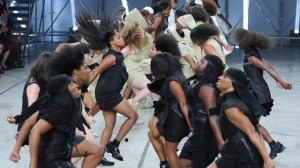
Now this is more like it! At Paris Fashion Week designer Rick Owens actually did something interesting, and replaced the usual skinny white models on his runway with a team of step dancers.

ku-xlarge

jezebel.com

Callie Beusman at Jezebel asks whether this is really a subversion of fashion’s norms, or is just another attempt at garnering publicity with shock tactics. But the fact that casting a whole fashion show with normal-sized black women is actually shocking in itself makes the point about diversity in fashion. It shouldn’t be shocking at all.

I’m all for this – who cares if it’s about publicity? It’s exactly the kind of publicity that is needed to get the question of race and beauty into the spotlight. And the clothes look so much cooler. I could almost be interested in fashion if it carries on this way.


Nice beard, Darwin, but I’m not selecting you

It has come to my attention that this blog is not the first result to come up when you Google ‘beautiful in theory’. While this displeases me, I can accept losing out to a TED talk, and a good one at that, by Denis Dutton:

Dutton

However, the fact that his talk is on evolutionary theories of beauty is annoying, because this is a subject I go out of my way to avoid.

But if Google insists, I will face it.

I’m not sure why Darwinian theories of beauty wind me up so much. It’s not that I want to cling to some mysterious essence of Beauty that would be destroyed by the admission that beauty is just about big boobs being sexy because they signal fertility. Sure, fine, I can get behind that. It just seems a very partial theory, that doesn’t account for the huge variety of things we find beautiful, the ways in which we experience that beauty, and the social conditioning that influences both of those.

Yes, I am a member of the social conditioning school of thought. I am not denying our DNA, but it is difficult to justify a genetically hardwired preference for detailed ideals of human beauty, which fluctuate over time and place and often include features that clearly do not promote our survival. For instance, pale Victorian beauty or 21st-century tanned beauty: paleness is associated with illness even within the Victorian ideal (you know, sexy tuberculosis), and a tan does not necessarily indicate health. It could indicate a propensity for skin cancer. Both have been linked to status – the privilege of not doing manual labour out in the sun; the money to go on holiday to Tenerife. Both inconclusive, neither related to human evolution (I sincerely hope). It is not, however, difficult to trace the social influences behind such changing ideals of beauty. The intrinsic racism of both white-centred ideals has nothing to do with natural selection.

But Denis Dutton has comebacks for these points. His talk makes clear the role of status in sexual choices, and interestingly this is how he explains the beauty of art from a Darwinian standpoint. That is, a work of art is a “fitness signal” demonstrating the artist’s skill. And skill equals sexiness.

rpi_x_lxb098ee24f6

rinkworks.com

Does that include skill with makeup? And do all our gamut of beauty ideals come down to a combination of status and fertility signals? To an extent I could say yes, the importance of both those factors is clear. This evolution argument offers a reasonable explanation for the origins of beauty’s foundations, and perhaps also the origins of the social conditioning that drives our understanding of beauty today. But the interesting discussion is about that social conditioning, not the cavemen who may have unwittingly started it all.

On a simple level, it works quite well. Prof Dutton entices us in with the pithy statement, “Beauty is nature’s way of acting at a distance.” Beauty arouses and sustains our interest in something that is beneficial to us in a more sophisticated version of beneficial food tasting good. So, when we see a strong, clear-skinned, sexually developed person with good teeth and regular features, we have evolved to find them beautiful because that causes us to pursue them. The infatuation such beauty creates makes us chase after the person with the best, healthiest genes to combine with our own. OK, fine. But boring. And where does that leave Botticelli’s Venus, the fascination and disgust with cosmetic surgery, and the racism surrounding the first Indian-American Miss America?

The reason I shy away from evolutionary theories of beauty is that they seem to reduce some of the best things in life to a single, dull motive. Have sex, stay alive. And when it comes to human beauty, evolution seems inadequate to explain the complexities of the ideas and problems, art and argument, of the last thousand or so years. If all of that was about having sex and staying alive, what’s the point of it all? This blog would be out of business.

Evolution? So yesterday.


Moral Dilemma: Suri’s Burn Book

I’d like to recommend Suri’s Burn Book to anyone who hasn’t yet seen it, but I have a niggling feeling that it might not be totally OK to enjoy this website.

suris-burn-book

shinyshiny.tv

After all, it’s an adult (Allie Hagan) pretending to be Suri Cruise, and in that character passing cutting judgements on the appearances of other celebrity children. Of course, it is a satire that highlights how ridiculous it is to analyse paparazzi photos of famous people, in the hope that we can criticise them till they seem acceptably imperfect.

For instance, ‘Suri’ captions a picture of Sandra Bullock with her adopted son Louis, “On a boat, in Venice, with two Oscar-winning actors, one of whom was George Clooney, and Louis Bullock is still irritated with life. I love him.”

Or, with a photo of Gwen Stefani and Gavin Rossdale with their kids: “It’s Zuma Rossdale’s birthday, and he celebrated in Superman pajamas. On my fifth birthday, I wore Prada and supervised a dignified party game, but I guess to each their own. At least Kingston understands how I feel.”

And then: “Apple Martin is the Tilda Swinton of the celebrity child community. (She’s weird.)”

And it’s very funny. But I’m still not sure it’s OK. And I am not the only one to think this: The Daily Beast and The Washington Post have also posed the question. So I have drawn up a list of pros and cons, and hope that you can help me reach a morally respectable conclusion.

Pros:

  • It’s useful to have such a satire to remind us not to read the Daily Mail’s Sidebar of Shame.
  • Suri is depicted as being pretty cool in an ironic sort of way.
  • Her criticisms of fellow celebrity children are absurd rather than cruel.
  • Katie Holmes hasn’t sued them yet, so it can’t be that bad.

Cons:

  • It sort of works as a substitute for the Daily Mail’s Sidebar of Shame.
  • Suri is, in fact, a real person whose identity has been hijacked for comedy purposes.
  • The kids featured on the website are also real people, and don’t really need more scrutiny.
  • We probably shouldn’t encourage the paparazzi to take pictures of said children.
  • Why hasn’t Katie Holmes sued them yet? There’s a published book now and everything.

Suri's Book

amazon.com

Oh dear, this isn’t really the result I was hoping for. But please cast your votes and help me decide!


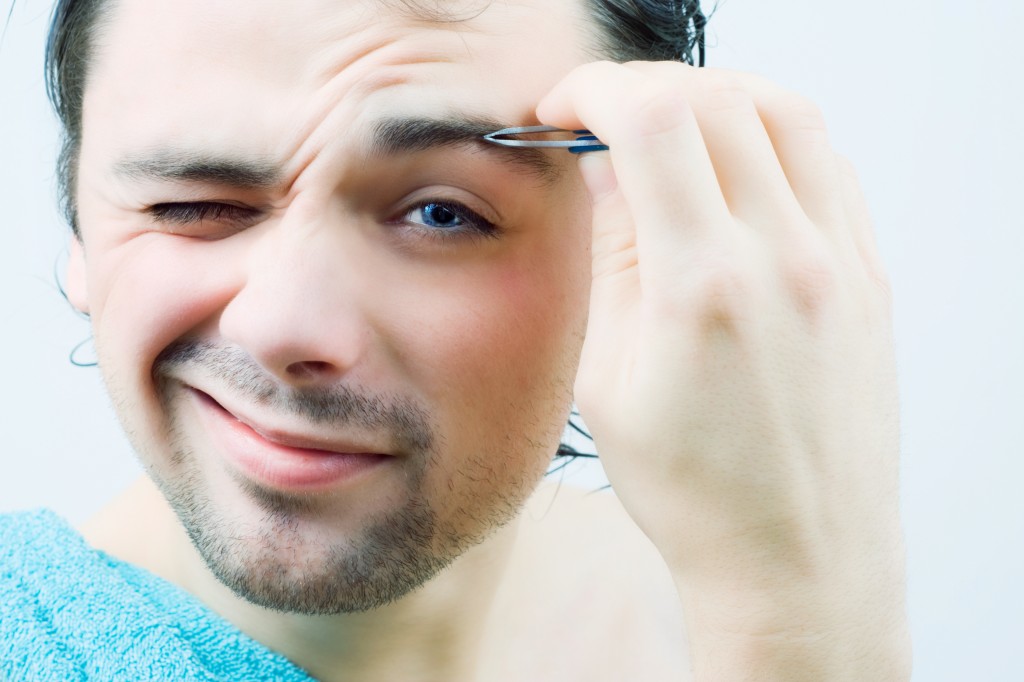
“Oh my God, my eyebrows need plucking…”

**The Armpit Song** by Siwan Clark is a most welcome antidote to Ms Cyrus and her twerking this week – thanks to Tamsin for the link.

plucking_eyebrow-1024x682

essentialstyleformen.com

However, I reckon there are more parts to the process of beautifying than Siwan could fit in her song, so I have taken it upon myself to write some extra verses:

Oh my God, I’ve plucked my brows unevenly,
I’ve coloured them back in and now I look like
Cara Delevigne Liam Gallagher;
And Oh my God, my face needs serum and
Essence and primer now there’s
Superprimer too, and I don’t know
What these things are,
But they’re £50 a jar,
And then they’re covered with foundation
And with setting spray and powder to
Make sure you cannot see my face at all…

Oh my God, my face needs contouring,
Which means inventing cheekbones with
Three shades of powder, a
Bronzer and a blusher and
Illuminator too;
And Oh my God, I need five shades
Of eyeshadow, two sets of
Fake lashes and some very scary glue;
And Oh my God, my eye is full of
Liquid eyeliner, it’s really not
A feline flick
at all…

But at least you cannot see my face at all.

And as Siwan says, who is brave enough to take a stand against this on their own? I took a stand against plucking my eyebrows. Just one thing, but it was easier than I expected, so that’s something.

Armpits, though?


Femen and Semen

It is certainly an exciting scoop to discover that the Ukraine-based feminist organisation Femen is run by a man, but that is no excuse for the media (and especially for the Guardian and the Independent) to engage in hysterical sensationalism without actually discussing the implications.

Femen_à_Paris_4

Femen protestors (commons.wikimedia.org)

Fair enough that the Independent article is primarily just reporting the story, but Bim Adewunmi and Suzanne Moore at the Guardian are in the opinion business, and neither have really sung for their supper this week.

The revelation is made in Kitty Green’s film Ukraine is not a Brothel, which has just been screened at the Venice Film Festival. In this documentary following a year in the life of Femen, Victor Svyatski – previously described by Femen as a ‘consultant’ – is outed as the founder and controller of the organisation, who are known for their topless protests.

Suzanne Moore takes this as a (legitimate) opportunity to discuss the role of men in feminism, saying that of course they should be part of it, but not so much running the show. I am not convinced that this is actually a self-evident truth: sure, it makes no sense to have a man running a feminist group dictator-style, as Svyatski is described, since you can’t really challenge the patriarchy using… patriarchy. But feminism and its proponents need to make clear that we don’t assume all men will attempt to take over feminism if we give them a chance to get involved. We need men to get involved, because we are all part of patriarchal structures and can only change things by working in collaboration. I am a great fan of Moore’s writing, but in this case she seems to miss the point, continuing with a lament that any feminist criticism of men or sexism is shouted down with accusations of man-hating. This is a perfectly good debate, but not the one we need to have about Femen.

Bim Adewunmi, on the other hand, says, well, nothing really.

The discussion we need to have is connected to beauty, and its social and political uses. The Independent quotes Kitty Green as saying of Svyatski:

“It’s his movement and he hand-picked the girls. He hand-picked the prettiest girls because the prettiest girls sell more papers. The prettiest girls get on the front page… that became their image, that became the way they sold the brand.”

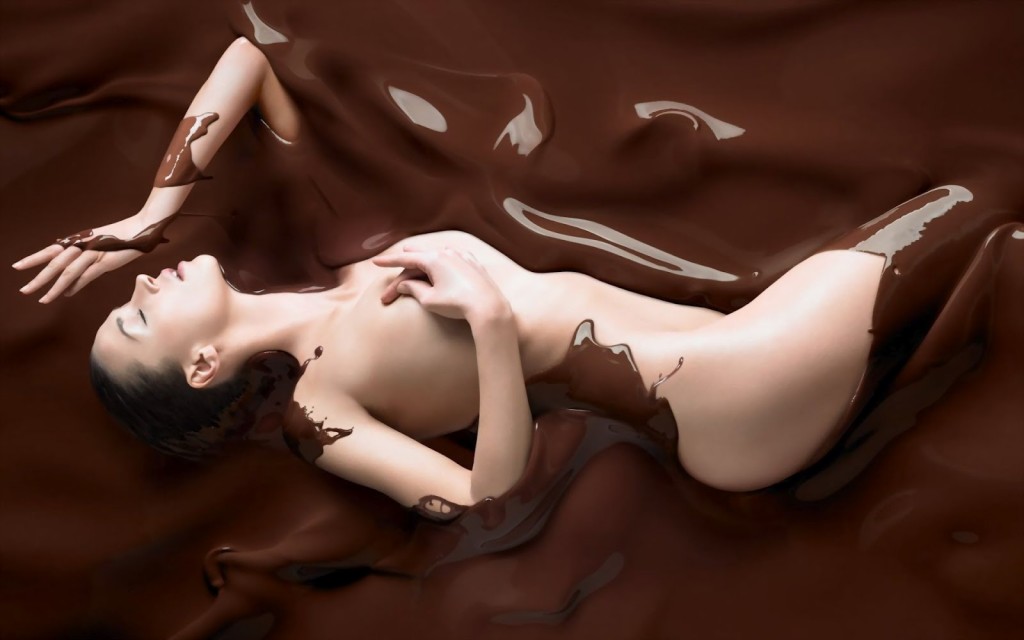
This is standard practice for advertising, but for feminism? If this is true, then Femen’s vaunted campaign – for women’s bodies to be their own, not subject to political or religious oppression, not sexually objectified – is null and void. You wouldn’t run a healthy food campaign by bribing people in with chocolate.

Chocolate-Bath-at-Home-1024x640

globalcool.org

And I’m pretty sure the problem here is not that a man founded Femen, but that he seems to run it based on very anti-feminist principles. This would equally be a problem if a woman ran the organisation in that way, though the issue would not be loaded with quite the same issues.

Svyatski himself seems quite keen to display his total lack of understanding regarding feminism, when he says of the Femen activists in Green’s film:

“They don’t have the strength of character. They don’t even have the desire to be strong. Instead, they show submissiveness, spinelessness, lack of punctuality, and many other factors which prevent them from becoming political activists. These are qualities which it was essential to teach them.”

So they, er, need a Man to educate them out of their weak Womanly ways. Would this be so enraging if it had been said by a woman? Imagine if someone formidable like Anna Wintour was pulling the Femen strings and said this: we might call her a dictator but I don’t think it would create a fundamental contradiction at the heart of Femen. It would, however, do so if Ms Wintour was hand-picking pretty girls to strip off for publicity. That would not be OK.

Incidentally, that is exactly what she does at Vogue. That is also exactly what organisations like Femen are supposed to be challenging. Unfortunately that’s a bit long to spell out on my breasts.


“ROSY CHEEKS . . . Skin clear as Alabaster . . . LENNOX’S HARMLESS ARSENIC WAFERS”

pills_elitedaily2

elitedaily.com

No beauty advice would be complete without a rundown of the ‘superfoods’ and drinks that make you lovely from the inside, but I was reminded of the strange history of edible beauty recently by an advert for Perfectil beauty supplements. It’s a bit of an odd one:

“It contains vitamin B2, biotin and iodine which contribute to the maintenance of normal skin and provides 1000mcg of copper which contributes to normal skin pigmentation. It also includes selenium and zinc, which contribute to the maintenance of normal nails and normal hair…”

These pills will make you normal! Not exactly the kind of promise you expect to see in a beauty magazine.

While I am quite pleased at the implication that normal might actually be good enough for once, I am less sure about ingesting copper to achieve it. I know, it’s probably fine, but if we look back at the beauty supplements of the past, we might be just a little bit wary…

  • Drinking vinegar for clear skin.
  • Apparently the warm urine of a young boy does that too.
  • You can get bright eyes with “half a dozen drops of whisky and the same quantity of Eau de Cologne, eaten on a lump of sugar” (from Mental Floss)
  • And don’t forget to try Belladonna eye drops.
  • Along with cocaine toothpaste, for that sparkling smile! (from The Everyday Goth)

And my personal favourite:

  • “ROSY CHEEKS . . . Skin clear as Alabaster . . . LENNOX’S HARMLESS ARSENIC WAFERS” (advert in Home Chat, 1900)

    ophelia

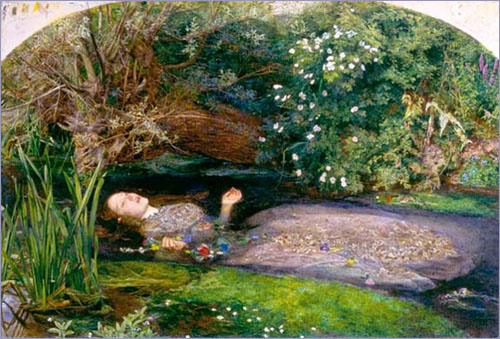
‘Ophelia’ by John Everett Millais, 1851-2 (tate.org.uk)

And that’s before we even get to the things that go on your skin:

  • The Ancient Greeks used to bleach their hair using pigeon excrement.
  • They also singed off their pubic hair using heated stones. Makes a Brazilian wax look tame.
  • Some classic 18th and 19th-century makeup ingredients: hyposulphite of soda, mercury, corrosive sublimate (I love this – sublimated corrosion?), carbonate of lead, sugar of lead (in Leigh Summers, Bound to Please).
  • Oh, and some classic 21st-century makeup ingredients: urea (which used to be extracted from horse urine), oleoresin capsicum (that’s pepper spray), diatomite (a component of dynamite), guanine, i.e. fish scales – also known as ‘natural pearl essence’. Nice. (from No More Dirty Looks).

Anyone know of more horrors that I’ve missed? Somehow goji berries and coconut water suddenly seem a much more inviting route to beauty…


Stop Reading! Your Computer is Making You Ugly

According to this month’s Elle magazine, anyway.

woman-computer

patcegan.wordpress.com

Despair slithered down my spine as I read Sophie Beresiner’s description of how the “stealth youth drainer” (i.e. computer) I work on was slowly sucking the freshness from my face like Michelle Pfeiffer’s witch in Stardust. Et tu, laptop? Here’s how:

  • Beresiner kindly asks if I’m sitting comfortably. WELL STOP, she continues. It’s giving you wrinkles.
  • The computer is chucking free radicals at your face. What are they, anyway? Who knows, but they’re ageing you too.
  • Are you using a phone? Gross! It’s dirty and will give you spots.
  • The actual air of your office is probably air-conditioned and is ageing you. Sorry.
  • You had a sandwich for lunch? A sandwich that you bought? Disgusting. Pre-prepared sandwiches and salads are “dead foods”. They’re giving you spots too.
  • Your face is ageing your face. It’s your resting face. You probably frown all the time – go on, I bet you do. According to a “skincare expert” your bitchy resting face creates a “focus mould” for your facial muscles and they get stuck there. You know, like when the wind changes and your ugly face gets stuck forever.

Gosh, thank you Sophie. I didn’t realise my precious beauty was in such terrible danger. But what’s the solution?

Well, apart from buying a Chanel moisturising spray for £44 and drinking chlorophyll powder, it seems all I have to do is… go for a walk at lunchtime. Oh really? That’s all?

Boring. Chanel and chlorophyll all the way.


Hemline Feminism

blond-young-woman-in-short-skirt-thumb

wisewomencoffeechat.com

Whenever a story crops up about a sexual or sexist attack in which the (female) victim is accused of wearing the kind of clothes that ‘ask for it’, I always feel that one important point is never made. Although the argument that women really should be able to wear what they like without incurring ‘justified’ rape ought to be enough to end the discussion (if only!), I think there is more to be said on the clothing choices available to girls and women.

Now, I know I am not the only person who has purchased a lovely summer dress, which looked absolutely fine in the changing room, only to find that once you start walking around in it the skirt is barely swishing over your buttocks. Or the difficulty in finding tops with a neckline high enough to cover your bra. Or a shirt for work that is not completely see-through. I mean, seriously, why would you ever want a see-through shirt?

And yes, if you are concerned by these things you can choose to wear something modest like trousers and a shirt – oh wait.

Choice is a funny thing. It is very easy for a rape apologist to say that women can just choose to wear clothes that cover their bits up and then, erm, there will be no more rape. However, if you cast a critical eye over the window displays of clothes shops aimed at young and youngish women, you will see an overwhelming dominance of teeny skirts, skintight jeans, low-cut tops, see-through blouses, backless dresses, hotpants and this summer – God forbid – crop tops. These are the clothes that girls and women are encouraged to wear by adverts, magazines and the celebrities who unfortunately function as role models. Add to that the immense pressure to be hot and sexy and it no longer seems like a simple choice for a sixteen-year-old girl to wear a polo neck and bootcut jeans from Marks and Spencer.

If there is a better solution than safety pins and opaque tights then I for one would like to hear it.


“Beauty Terror”: Thoughts on ‘Bodies’ by Susie Orbach

“Beauty terror” is an evocative phrase. Troubling and mysterious, but I think that everyone will immediately have a good idea of what it means. We have probably all felt it.

Bodies

The idea of beauty terror comes from Susie Orbach’s 2009 book, Bodies, which I have recently been reading and would highly recommend. Orbach is a practising psychoanalyst, and she knows what she is talking about. Her work draws on the real cases of her patients as well as feminist and cultural theory, but it is readable, sensible and kind of rocks.

So what is beauty terror? Is it a terror of beauty itself, beautiful people, or of not being beautiful? I think the last suggestion carries the most weight, but that they are all connected. According to Orbach, beauty terror is created by:

  • The 2000-5000 Photoshopped and enhanced images of bodies that we see every week
  • The ideal of beauty that these bodies show – a kind of beauty that is becoming ever more narrow, with less room for variation
  • The beauty industry which produces these images, and then offers products to ‘fix’ our faulty bodies and solve our insecurities
  • The insecurities that they created in the first place, you mean?
  • Yes, those ones. What a genius money-spinner.

BACKSTAGE_2052829a

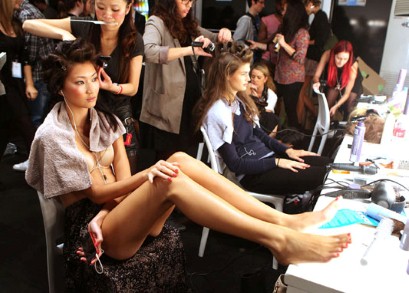
“Our bodies are and have become a form of work.” Fun! (Orbach, p.16). fashion.telegraph.co.uk

People defend beauty practices (or beauty work, as feminists rightly call it) by saying that we have always used makeup and transformed our bodies. Cleopatra’s eyeliner and the African tribes who stretch their necks with bangles are often given as justification. Orbach has an excellent response to this, which hinges on the fact that those kinds of beauty practices were done for very different reasons:

“What is new today, however, is the way in which bodily transformation is no longer linked to social ritual within the family but is part of the individual’s response to wanting to produce what is an acceptable body.” (p.98)

An elongated neck may be regarded as a feature of attractiveness, but that is strongly bound up with its role as a feature of belonging to that community. As for Cleopatra and pals, apparently kohl eyeliner helps stop you having to squint against the sun.

The bodily transformation we chase today is a feature of a different kind of belonging: the ideal body is presented as the only acceptable body, and anything less is less than human. A fat body is called a whale, a cow, a lump. An animal, an object, a failure. Never a person, just trying to get on with their life.
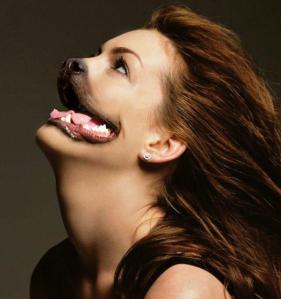
Photoshopped-dog-or-a-woman

lolzbook.com. Yeah. Lolz.

So of course we keep going back to the beauty and diet products, and the advice of the beauty magazines, because we keep failing to become acceptable. And of course we fail: the ideal, acceptable human body is not a human body at all, but a digital image, a set of pixels that have been shifted, brightened and deleted by Photoshop whizzes into an eerie shiny symmetry. A symmetry which flesh can only achieve when sliced up and sewn back together. As Orbach says, “the body has become a series of individual images and a labour process in itself” (p.90).

And we sort of know this, we do. “We reject the idea of being under ‘assault’ by the beauty industry as offensive to our intelligence. We believe that we can be critical of the negative practices of this persuasive industry and simply enjoy fashion and beauty, and yet the constant exhortation to change gets under our skin” (Orbach, p.108-9).

Simple resistance is really too much to expect of anyone who has been surrounded by these images, adverts and beauty talk – fat talk, transformation talk, makeup talk – since, well, birth. It’s too much to expect that anyone could ignore the clamour and feel like their body is just a vehicle that they live in, and it doesn’t really matter how it looks. We no longer have that idea of the body made available to us. Instead, that vehicle needs pimpin’.

We can try though. Reading books like Bodies and talking about them is a pretty good start. Adding to our beauty talk some discussion of Photoshop, capitalist profit-making and the problems in the dream we are sold.

Making a noise. Being more than a picture.
word hug

vyperlook.com